Tag Archives: bomber
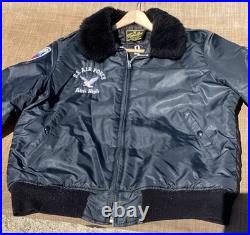
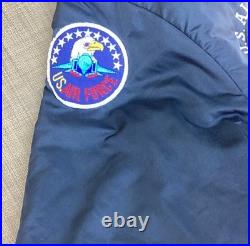
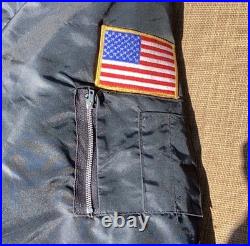
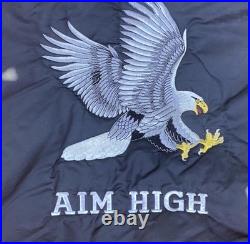
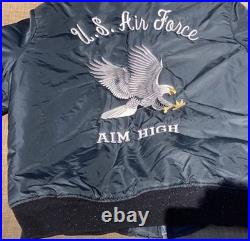
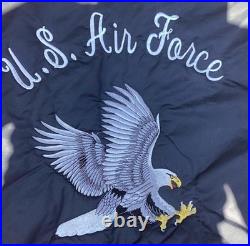
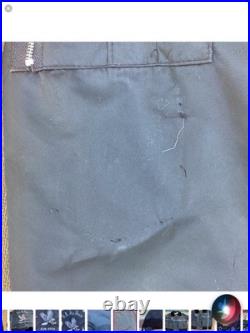
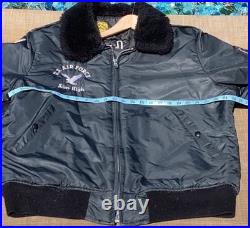
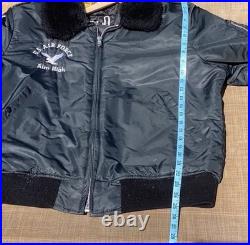
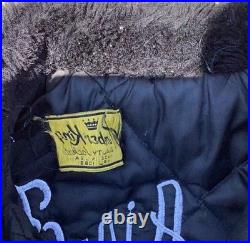
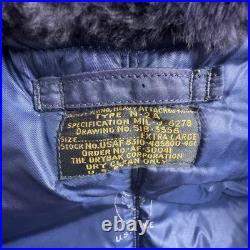
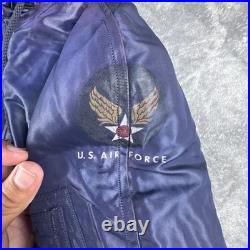
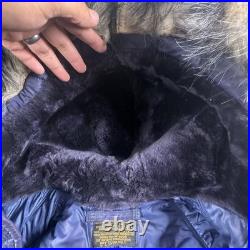
VTG US Air Force Excaliber Flight Bomber Jacket Fur Collar Navy Blue. MEDIUM
Air Force 1 172 USAAC North American B-25B Mitchell Medium Bomber, AF10111B
In the future, war will be waged essentially against the unarmed populations of the cities and great industrial centers. Italian General Giulio Douhet. The North American B-25 Mitchell is an American medium bomber that was introduced in 1941 and named in honor of Brigadier General William “Billy” Mitchell, a pioneer of U. Used by many Allied air forces, the B-25 served in every theater of World War II, and after the war ended, many remained in service, operating across four decades. Produced in numerous variants, nearly 10,000 B-25s were built. It was the most-produced American medium bomber and the third most-produced American bomber overall. These included several limited models such as the F-10 reconnaissance aircraft, the AT-24 crew trainers, and the United States Marine Corps’ PBJ-1 patrol bomber. In March 1939, the US Army Air Corps issued a specification for a medium bomber that was capable of carrying a payload of 2,400 lb (1,100 kg) over 1,200 miles (1,900 km) at 300 mph (480 km/h). North American Aviation (NAA) used its NA-40B design to develop the NA-62, which competed for the medium bomber contract. No YB-25 was available for prototype service tests. In September 1939, the Air Corps ordered the NA-62 into production as the B-25, along with the other new Air Corps medium bomber, the Martin B-26 Marauder “off the drawing board”. Early into B-25 production, NAA incorporated a significant redesign to the wing dihedral. The first nine aircraft had a constant-dihedral, meaning the wing had a consistent, upward angle from the fuselage to the wingtip. This design caused stability problems. “Flattening” the outer wing panels just outboard of the engine nacelles nullified the problem and gave the B-25 its gull wing configuration. Less noticeable changes during this period included an increase in the size of the tail fins and a decrease in their inward tilt at their tops. NAA continued design and development in 1940 and 1941. Both the B-25A and B-25B series entered USAAF service. The B-25B was operational in 1942. Combat requirements led to further developments. Before the year was over, NAA was producing the B-25C and B-25D series at different plants. The NA-100 of 1943 and 1944 was an interim armament development at the Kansas City complex known as the B-25D2. Similar armament upgrades by U. S-based commercial modification centers involved about half of the B-25G series. Further development led to the B-25H, B-25J, and B-25J2. The gunship design concept dates to late 1942 and NAA sent a field technical representative to the SWPA. The factory-produced B-25G entered production during the NA-96 order followed by the redesigned B-25H gunship. The B-25J reverted to the bomber role, but it, too, could be outfitted as a strafer. NAA manufactured the greatest number of aircraft in World War II, the first time a company had produced trainers, bombers, and fighters simultaneously (the AT-6/SNJ Texan/Harvard, B-25 Mitchell, and the P-51 Mustang). It produced B-25s at both its Inglewood main plant and an additional 6,608 aircraft at its Kansas City, Kansas, plant at Fairfax Airport. After the war, the USAF placed a contract for the TB-25L trainer in 1952. This was a modification program by Hayes of Birmingham, Alabama. Its primary role was reciprocating engine pilot training. A development of the B-25 was the North American XB-28 Dragon, designed as a high-altitude bomber. Two prototypes were built with the second prototype, the XB-28A, evaluated as a photo-reconnaissance platform, but the aircraft did not enter production. This particular 1:72 scale replica of a B-25B Mitchell medium bomber was nicknamed “Whirling Dervish”, which participated in the Doolittle Raid over Tokyo on April 18th, 1942. Dimensions: Wingspan: 11-1/4-inches Length: 8-3/4-inches. Features: – Diecast construction with some plastic parts – Interchangeable landing gear options – Plexiglass canopy – Spinning propellers – Accurate markings and insignia – Comes with display stand. Historical Account: “They Flew From Shangri-La” – The Doolittle Raid of April 18th, 1942, was the first air raid by the United States to strike the Japanese home islands during World War II. The mission was notable in that, for the only time in US military history, United States Army Air Forces bombers launched into combat from a US Navy aircraft carrier. The Doolittle Raid demonstrated that the Japanese home islands were vulnerable to Allied air attack, and it provided an expedient outlet for US retaliation for Japan’s attack on Pearl Harbor on December 7th, 1941. The raid was planned and led by Lieutenant Colonel Jimmy Doolittle, already a famous civilian aviator and aeronautical engineer before the war. The raid, however, had its roots in the mind of Navy Captain Francis Low, who early in the war predicted that, under the right conditions, twin-engine Army bombers could be successfully launched from an aircraft carrier. Subsequent calculations by Doolittle indicated that the B-25 Mitchell could be launched from a carrier with a reasonable bomb load, hit military targets in Japan, and fly on to land in China. We are a leading retailer of Air Force 1 products. We will do our utmost to correct any deficiencies and ensure that you are happy with the product you ordered. Thank you for your consideration.
8 Killed In B 52 Bomber Crash At Edwards Air Force Base
Officials Say Eight People Died In B 52 Bomber Crash At Us Air Force Base In Southern California
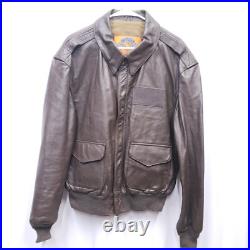
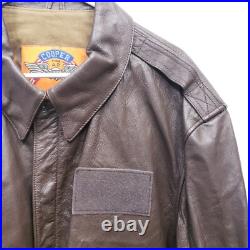
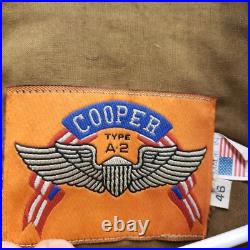
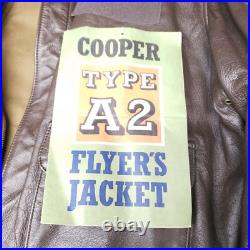
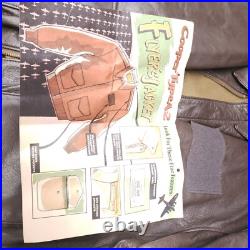
US AIR FORCE COOPER FLYERS MEN’S LEATHER BOMBER TYPE A2 JACKET 46R Original Tag


Pristine Condition with Original Tag that was removed and stored in the front pocket of the jacket. Pit to Pit 24. Top to bottom 28. The US Air Force Cooper Flyers Men’s Leather Bomber Type A2 Jacket in size 46R is an authentic piece of militaria from the United States. This jacket is designed in the classic bomber style, reflecting its Air Force origin. It features the original tag, adding to its collectible value and historical significance. The jacket is a representation of military aviation history and is sure to appeal to collectors and enthusiasts of Air Force memorabilia.
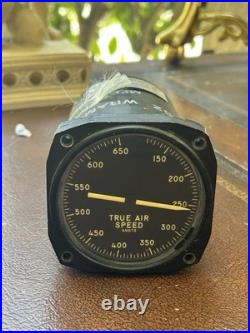
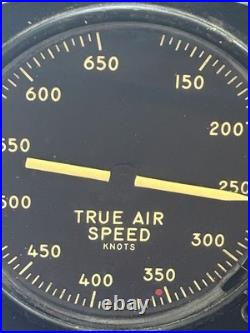
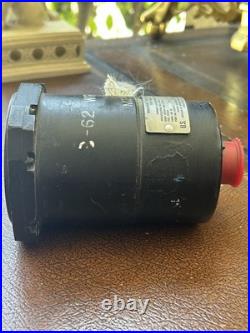
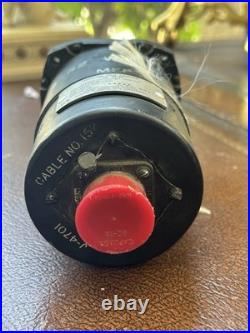
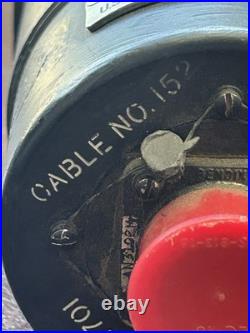
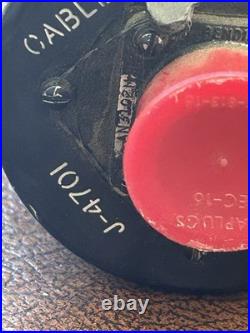
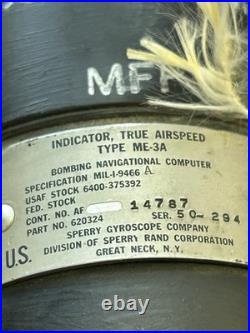
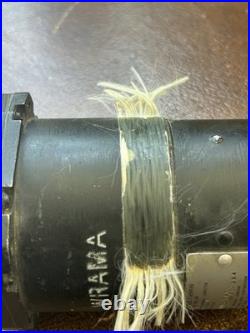
USAF Sperry ME-3A True Airspeed Indicator Cold War B-47 B-52 Bomber Cockpit


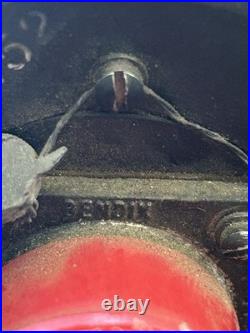
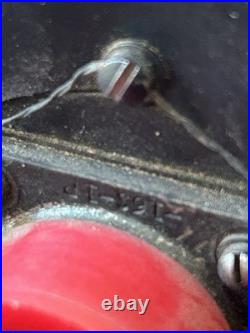
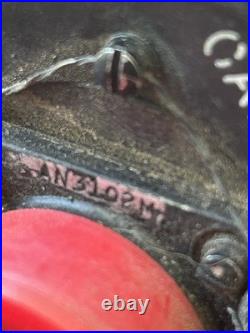
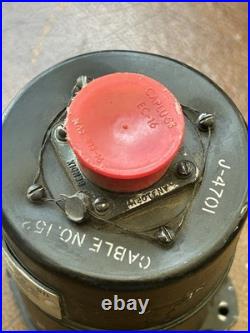
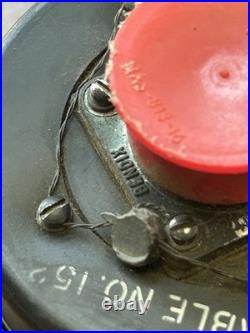
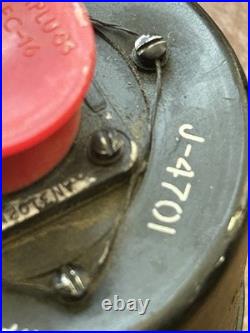
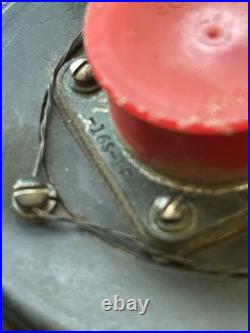
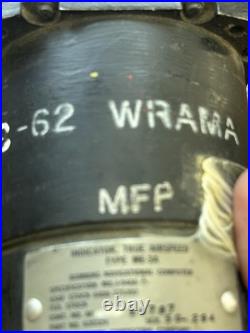
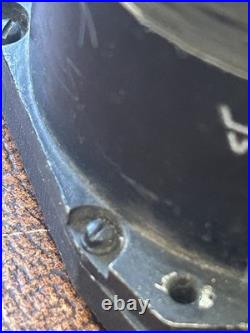
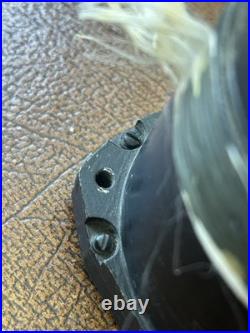
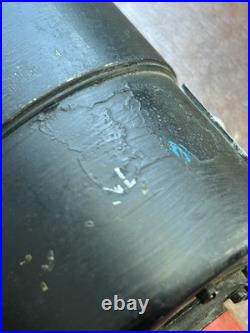
DESCRIPTION: Sperry Gyroscope Company. Great Neck, New York. That’s the provenance in three lines. This is a USAF ME-3A True Airspeed Indicator – a component of the bombing navigational computer system used on early Cold War strategic jet bombers. The B-47 Stratojet and B-52 Stratofortress carried this class of instrument into the most dangerous decade in American military history. Sperry Gyroscope, a division of Sperry Rand Corporation, was one of the premier defense electronics contractors of the era. This is not commercial surplus. This is the real thing. The March 1962 Stamp The chalk marking on the body reads “3-62 WRAMA MFP” – a depot maintenance stamp from Warner Robins Air Materiel Area, Robins Air Force Base, Georgia. WRAMA was one of SAC’s primary depot-level overhaul facilities for B-47 and B-52 avionics throughout the Cold War. This instrument was certified operational in March 1962. Nine months later, SAC bombers were placed on DEFCON 2 during the Cuban Missile Crisis – one step from nuclear war. B-52s under Operation Chrome Dome were already flying continuous airborne alert missions carrying nuclear weapons around the clock. This wasn’t a peacetime instrument. It was Cold War infrastructure. Condition – What You’re Getting – Face reads “TRUE AIR SPEED / KNOTS” – range 150 to 650 knots – Face glass clean, no cracks, original needle intact – Needle moves freely when instrument is tilted – mechanism is not seized. AF-14787, Spec MIL-I-9466A, USAF Stock No. Bendix Aviation was itself a premier Cold War defense contractor – this is the standard Army-Navy specification connector used across USAF aircraft of the era – Original red Caplugs EC-16 dust cap on rear Bendix connector – intact. Many surplus instruments have been stripped of these protective caps over the decades. This one has not been touched – Original safety wire intact through the rear housing screws – the instrument has not been opened or tampered with since its last military service certification. This is exactly the condition warbird restorers and museum curators require – Chalk depot markings: “3-62 WRAMA MFP” – March 1962 certification, Warner Robins Air Materiel Area – Cold War service patina throughout – honest operational wear consistent with active flight line use Who Buys This Warbird restorers recreating accurate B-47 or B-52 cockpit instrument panels. Museum curators documenting Cold War strategic aviation. Serious militaria collectors who know what WRAMA means and why intact safety wire matters. If you’re reading this listing and you already know what you’re looking at – this is the one. Untested – airworthiness cannot be confirmed without proper pitot system connection and calibration. The physical condition, provenance markings, and documentation integrity are exceptional for a 70-year-old Cold War flight instrument. This is a precision instrument and it will arrive intact.

U S Air Force B 2 Bomber Pilots Rush To Take Off And Prepare To Encircle Iran
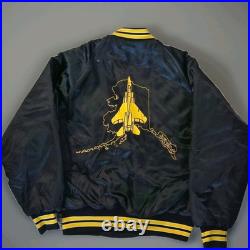
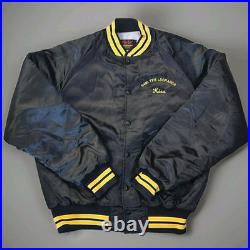
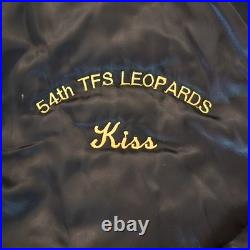
Vintage Military Bomber Jacket Pla-Jac By Dunbrooke Alaska 54th Fighter Squad Lg
The Vintage Military Bomber Jacket by Dunbrooke is a classic piece of US Military. Made with durable nylon outer shell and polyester lining and insulation, this black jacket features a band collar and a size L. The jacket is personalized and belonged to someone who went by Kiss. The 54th Fighter Squadron is an inactive United States Air Force unit. It was inactivated on 28 April 2000.