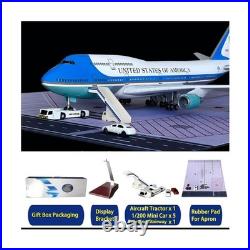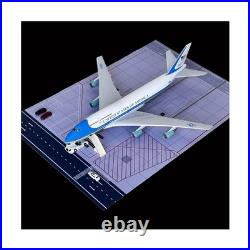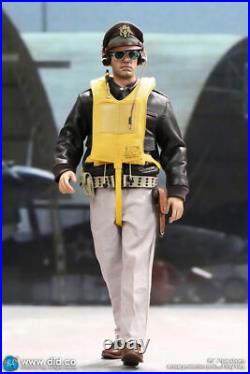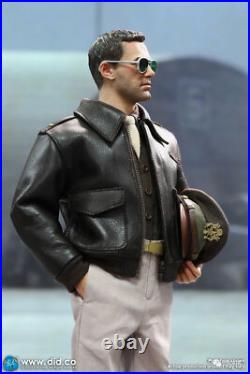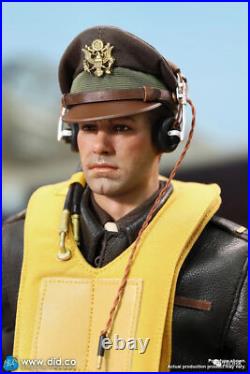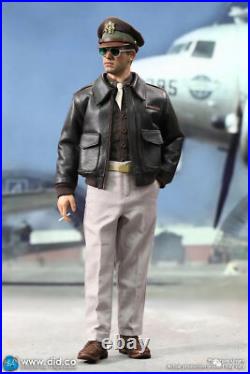



1/200 Helpa A 10C United States Air Force 51st Fighter Wing 25th Fighter Squadro
Thank you for viewing this listing. Please note that we may not be able to answer all questions depending on the content. Packing state: We will carefully pack your items with the most appropriate protection materials to avoid your items from getting damaged during transport to you. We would very much appreciate if you could leave us one, too! We are a Japanese store specializing in Japanese high-quality products. Please let us hear from you with any inquiries you may have about our products. ? About Other Countries Please note that this DDP service is available only for buyers located in the United States. E? E Low Tariffs and High Quality from Japan Japan is known for its low import duty rates and high-quality, authentic products. We sincerely appreciate your understanding and cooperation. Thank you for choosing authentic Japanese products Ewe look forward to serving you again!
Rare Original Navy/USN A-6/A-7, USAF F-111 PAYBACK IS BITCH LIBYA PATCH 1986
EXTREMELY RARE, ORIGINAL, AUTHENTIC US NAVY PATCH. The previous owner, a retired Navy officer and former Chief of Naval Reserve, later worked at Lockheed and other aircraft manufacturers. He played a role in the development of the F-22 and other aircraft. He was a passionate collector, particularly of patches related to the projects and groups he was involved with. This ensures that his patch collection, acquired during his years of service, is authentic and not recent reproductions. This unique patch commemorates the coordinated attack in 1986 by the US Navy’s A-6 Intruder and A-7 Corsair, along with the US Air Force’s F-111 Aardvark, on Libyan bases. The patch features the phrase “PAYBACK IS A BITCH” at the top, aircraft designators at the bottom, and illustrates the coordinated effort of these aircraft. The F-111s flew 3,500 miles to deliver their ordnance. The Intruders/Corsairs launched from their carrier in the Mediterranean Sea. The patch has a “thin plastic over very tight cheesecloth” backing. It has a “merrowed black” border and a “light blue twill background”. No Velcro on the back. Dimensions are shown in the photos (the ruler on the right is 6). This patch is part of the finest Intruder patch collection I’ve ever seen. It comes from a retired US Navy Captain’s collection, which I recently acquired. This is an original, one-of-a-kind item, so don’t miss your chance to own this piece of history. VA, A-6 Intruder, A-7 Corsair, VMA, USMC, VMA(AW), VAQ, EA-6B Prowler, EA-18G Growler, VAW E-2 Hawkeye, VF F-14 Tomcat, VFA F-18 Hornet/Super Hornet, VP P-3 Orion, P-8 Poseidon. US Navy, Carrier Air Wing (CVW), Mediterranean and Western Pacific cruises, Indian Ocean, Persian Gulf operations. Key operations include Operation IRAQI FREEDOM, Operation ENDURING FREEDOM, Operation SOUTHERN WATCH, Operation NORTHERN WATCH, Desert Fox, Desert Shield, Desert Storm.
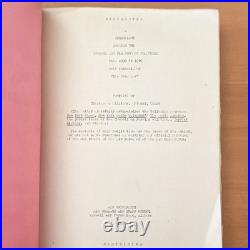
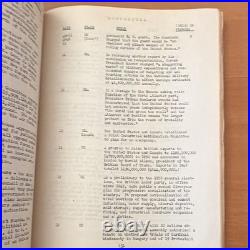
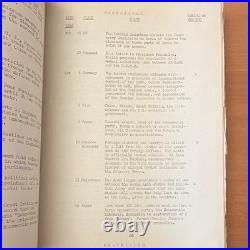
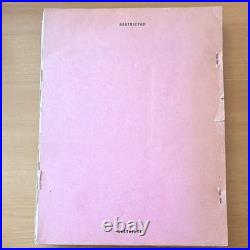
Vintage 1951Training Project Outlines RESTRICTED U. S Air Force Military Aviation


The product is a vintage 1951 training project outline from the U. S Air Force Military Aviation, specifically focused on the Korean War period. This original item provides historical insights into the military aviation training during that time, making it a valuable collectible for enthusiasts of militaria and military history. With its connection to a significant conflict like the Korean War, this artifact offers a unique glimpse into the training practices and strategies utilized by the U. S Air Force during this turbulent period in history. This is a vintage training manual from the United States Air Force. The title is Training Project Outlines Part I for Aircraft Observer Training. It is for the “M-Series Bombsight” and was produced by the Air Training Command. The document is marked as “RESTRICTED” and for INSTRUCTIONAL PURPOSES ONLY. Similar documents were produced around 1953. This item does have writing in it.

World War II Bag, Protective, Helmet Air Force Pilot 1940s Conmar Zipper 1940s
This product is a protective helmet used by US Air Force pilots protective helmet bag during World War II, complete with a 1940s Conmar zipper for added security. The design and construction of the helmet bag reflect the era of the conflict, making it a valuable collectible item from the period. With its originality and connection to the military history of the United States during WW II, this bag is a unique piece of militaria that would be a prized possession for any collector or enthusiast interested in the history of the war.

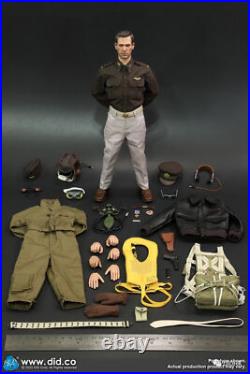
U. S. Air Force N2A Flyers Bomber Jacket XL Vintage Heavy Hooded Parka 50s
Russia Flight Suit FLIGHT HELMET PILOT HELMET AIR FORCE $ 1999
Built 1/48 USAF F-16 C VIPER 112th FS, 180th FW Ohio Air National Guard


Built 1/48 F-16C VIPER (Dark Viper). The Dark Viper term comes from the fact that the US AirForce recoated F-16s in the HAVE Glass radar absorbent paint that it also on the F-22 Raptor and F-35 Lightning 2. This particular model represents a bird from the 112th FS, 180th FW of the O-H-I-O air national guard STINGERS. The cockpit was upgraded with a Quinta detail set and intake and afterburner FOD covers were added and painted in the squadrons green color. The canopy isn’t glued and can be posed open or closed. Any questions please ask!
Vintage WWII US Air Force Air Crew BAILOUT BREATHING Oxygen Bottle
Air Force 1 172 USAF Lockheed SR-71A Blackbird Reconnaissance Aircraft AF10088E
You know the part in’High Flight’ where it talks about putting out your hand to touch the face of God? Well, when we’re at speed and altitude in the SR, we have to slow down and descend in order to do that. Gil Bertelson, SR-71 pilot, in’SR-71 Blackbird: Stories, Tales and Legends,’ 2002. The Lockheed SR-71 was an advanced, long-range, Mach 3 strategic reconnaissance aircraft developed from the Lockheed A-12 and YF-12A aircraft by the Lockheed Skunk Works. The SR-71 was unofficially named the Blackbird, and called the Habu by its crews. Clarence “Kelly” Johnson was responsible for many of the design’s innovative concepts. A defensive feature of the aircraft was its high speed and operating altitude, whereby, if a surface-to-air missile launch were detected, standard evasive action was simply to accelerate. The SR-71 line was in service from 1964 to 1998, with 12 of the 32 aircraft being destroyed in accidents, though none were lost to enemy action. The Air Force ordered a reconnaissance version in December 1962. Originally named R-12, it was later renamed SR-71. The SR-71 was longer and heavier than the A-12. Its fuselage was lengthened for additional fuel capacity to increase range. A second seat was added to the cockpit and the chines were reshaped. Reconnaissance equipment included signals intelligence sensors, a side-looking radar and a photo camera. During the 1964 campaign, Republican presidential nominee Barry Goldwater continually criticized President Lyndon B. Johnson and his administration for falling behind the Soviet Union in the research and development of new weapons systems. Johnson decided to counter this criticism by releasing information on the hitherto highly classified A-12 program, and later the existence of the reconnaissance version. The SR-71 designator is a continuation of the pre-1962 bomber series, which ended with the XB-70 Valkyrie. During the later period of its testing, the B-70 was proposed for the reconnaissance/strike role, with an RS-70 designation. When it was clear that the Lockheed A-12 performance potential was much greater, USAF decided to pursue an RS-71 version of the A-12 rather than the RS-70. However, then-USAF Chief of Staff General Curtis LeMay preferred the SR (Strategic Reconnaissance) designation and wanted the RS-71 to be named SR-71. Before the Blackbird was to be announced by President Johnson on February 29th, 1964. LeMay lobbied to modify Johnson’s speech to read SR-71 instead of RS-71. The media transcript given to the press at the time still had the earlier RS-71 designation in places, creating the myth that the president had misread the aircraft’s designation. This public disclosure of the program and its renaming came as a shock to everyone at the Skunk Works and to Air Force personnel involved in the program. All of the printed maintenance manuals, flight crew handbooks, training slides and materials were labeled “R-12″; while the June 18th, 1965 Certificates of Completion issued by the Skunkworks to the first Air Force Flight Crews and their Wing Commander were labeled “R-12 Flight Crew Systems Indoctrination, Course VIII”. Following Johnson’s speech the name change was taken as an order from the Commander-in-Chief, and immediate reprinting began of new materials, including 29,000 blueprints, to be retitled “SR-71″. Pictured here is a 1:72 scale replica of a USAF Lockheed SR-71A Blackbird reconnaissance aircraft. Dimensions: Wingspan: 9-1/4-inches Length: 17-3/4-inches. Features: – Diecast construction with some plastic parts – Interchangeable landing gear options – Fully articulated control surfaces – Plexiglass canopy – Canopy opens to reveal a detailed cockpit – Accurate markings and insignia – Comes with display stand. Historical Account: “Oxcart” – In July 1964, President Lyndon B. Johnson announced the development of the Lockheed SR-71 Blackbird strategic reconnaissance aircraft. This new and advanced aircraft would give SAC a reconnaissance capability that far exceeded any then available in terms of speed, altitude, and increased area coverage. In December 1964, the Department of Defense announced that the 4200th Strategic Reconnaissance Wing would activate at Beale Air Force Base, California on January 1st, 1965, as the parent unit of the SR-71. To prepare Beale AFB for its new mission, contractors lengthened the runway, remodeled the former Air Defense Command Semi-Automatic Ground Environment building, and constructed several new facilities, including 337 additional housing units. The wing was assigned to the 14th Strategic Aerospace Division and consisted of the 4201st Strategic Reconnaissance Squadron, three maintenance squadrons and the 4203d Reconnaissance Technical Squadron. In January 1966, the first SR-71 touched down on the Beale runway. The first T-38 Talon, a Northrop-built aircraft to be used as a trainer and chase plane for the SR-71, had arrived six months earlier. In October 1965, Fifteenth Air Force suggested the 9th Bombardment Wing be redesignated as the 9th Strategic Reconnaissance Wing to continue the history of the 9th. The Air Force accepted the suggestion and on June 25th, 1966, the 4200th wing and its components were discontinued and the 9th Strategic Reconnaissance Wing transferred to Beale to take its place. The Air Force also activated the 9th Reconnaissance Technical Squadron to replace the 4203d Reconnaissance Technical Squadron. Both the 1st and 99th squadrons moved with the 9th, while the 5th inactivated. For the remainder of 1966, the 9th Strategic Reconnaissance Wing developed the organization and infrastructure necessary for SR-71 operations. The wing included a Director of Intelligence and a Director of Tests, who monitored the exhaustive testing program in the primary stages. The wing also needed its own supply squadron to handle the specialized supplies and equipment this unique aircraft would need.