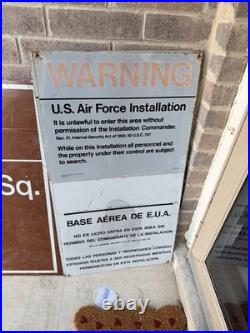
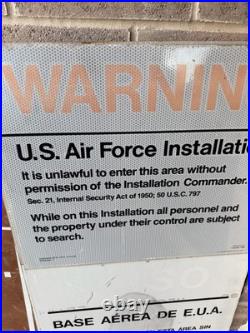
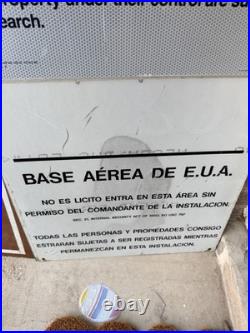
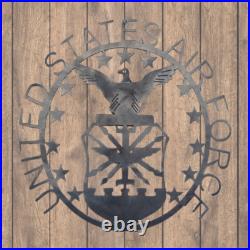
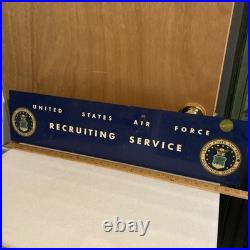
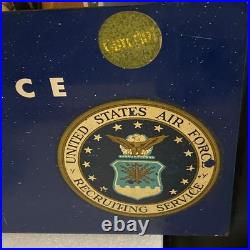
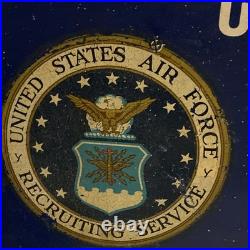
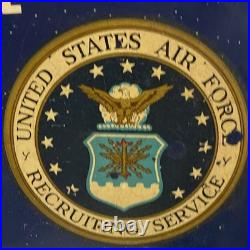
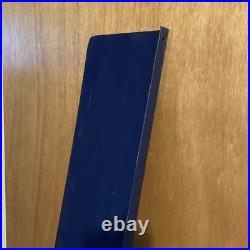
The Laughlin Air Force Base Warning Metal Sign is a vintage and heavy metal obsolete sign originating from the United States. This original piece of militaria collectible would make a unique addition to any military history or vintage decor collection. Its authentic design and historical significance from the 1990s would be sure to evoke a sense of nostalgia and appreciation for the military aviation industry during that time period. Great for pool fence man cave.
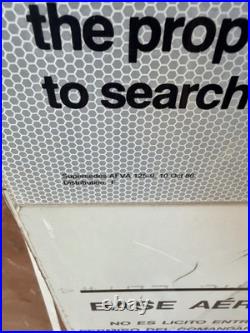
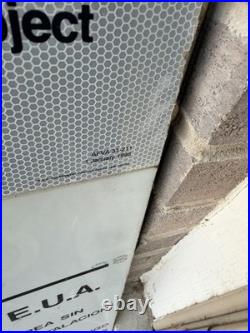
Some scratches and wear throughout consistent with age and use but overall displays nicely. Please see all photos as they are part of the description. Measures approximately 29 1/2 x 7 x 3/4 of an inch.
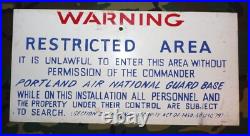
A nice, original “Restricted Area” sign from the Portland Air National Guard Base outside of Portland, Oregon. The bottom of the sign references Section 21 of the Internal Security Act of 1950, thus probably placing it in the Vietnam War era or thereabouts. The sign is from from stout sheet aluminum, measuring 9 inches by 18 inches, with two mounting holes. The facing side of the sign is painted white with blue and red lettering. Overall condition is very good or better, with 95% of original finish still intact. There are some surface scratches, but nothing really detracting from the overall presentation. This would look great on display in a collection of vintage Air Force or US military signage. Failing to make an effort to work out a solution is a poor reflection on the customer and justification for refusal to do business with you again. All items in my auctions are described accurately and honestly to the best of my knowledge and are believed to be genuine unless specifically stated otherwise. Contact me if you have further questions, but please be polite and articulate if you want an answer. Thanks for looking and best of luck!
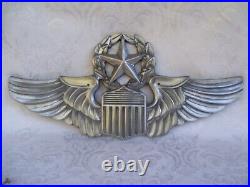
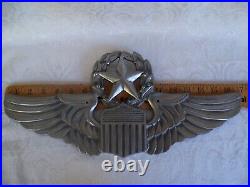
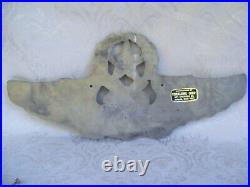
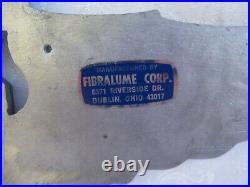
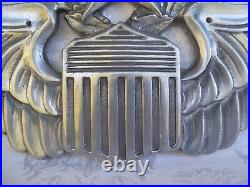
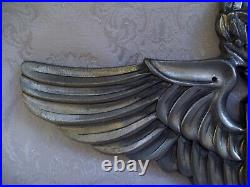
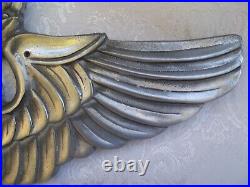
If you collect militaria as I do this U. Air Force Command Pilot Wings Plaque should be displayed in your collection. I’ve had it mounted on my wall for many years now and decided to make a change. The plaque measures approximately 17″ long and is about 7½” tall. Its weight is just over 2½ lbs. There are two pre-drilled holes that are original to the plaque’s design. These screw holes are provided so the plaque can be attached to the wall for display. The two screws I removed are taped to the back of the plaque for your use. This metal USAF Command Pilot Wing plaque is in excellent displayed condition as pictured. I DO MY VERY BEST TO DESCRIBE THE ITEM OR ITEMS IN MY SALE.
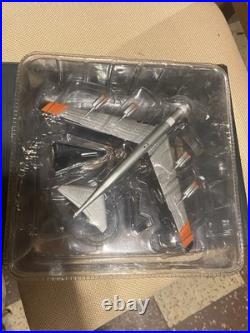
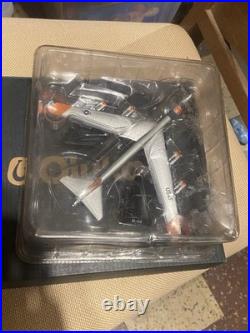
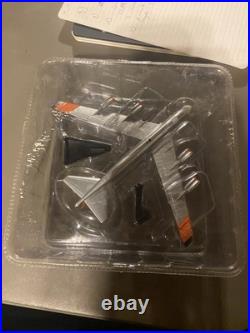
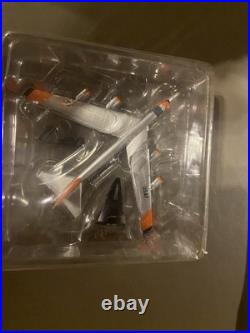
Nonsmoking, Pet Free Environment. The B-29 Superfortress heavy bombers were some of the largest aircraft in service during WW2. Equipped with four engines, they were not only powerful but also very advanced in design. They were equipped with fully pressurized fuselage, central fire control systems, and remotely controlled machine gun turrets. Aircraft this size and complexity were not easy to build, however. Four plants across the United States manufactured various components of the bombers, and sometimes bombers coming out of the factories were sent directly to depots for immediate modifications because of a recent design change. Although the complexity of the design caused a lot of production headaches, the issue that gave the design the biggest problem was the reliability of the Wright R-3350 engines. The engine constantly overheated and burned under stress, particularly during takeoffs, due to insufficient air flow. The problem was never completely resolved before the end of WW2. In general, B-29 pilots like the flight characteristics of the bombers starting in the earlier models. The unboosted controls were heavy and requested strength to operate, but advanced instrumentation made flying and navigation easy. In fact, a B-29 pilot could fly entirely on instrumentation should the pilot choose to do so. In flight, the pilots called for engine and flap settings reminiscent of how a sea captain would call for engine and rudder settings. In combat, although Superfortress bombers were not as heavily armored as other Allied bombers, they possessed one defense that no others could compete with. They were capable of flying at the altitude of 10,200m, just above the service ceiling of most Japanese fighters and just beyond the range of most anti-aircraft weapons. Their fast airspeed also made them difficult to intercept by fighters that could fly that high. The B-29 bombers were initially based in India (starting Apr 1944) and China (starting Jun 1944), attacking Japanese targets in Thailand and the Pacific rim. On 15 Jun 1944, 47 B-29 bombers took off from Chengdu, China and attacked the Imperial Iron and Steel Works at Yawata, Japan, marking the first attack on the Japanese Home Islands since the Doolittle Raid in Apr 1942; one bomber was lost during this mission. A total of 12 such similar bombing missions from India or China on Japan took place before they were transferred to the newly captured/constructed airfields in the Mariana Islands. The first bombing mission from the Marianas took place on 28 Oct 1944 (against Truk), and within a month missions were launched for major Japanese cities such as the capital Tokyo. These firebombing raids by Superfortress bombers devastated the war making capabilities of Japan and demoralized the Japanese population. Among the last WW2 combat missions that employed B-29 bombers were the 6 Aug 1945 atomic bomb attack on Hiroshima by Enola Gay and the 9 Aug 1945 atomic bomb attack on Nagasaki by Bockscar. In WW2, B-29 bombers were used exclusively by the United States Army Air Force in the Pacific Theater. After the war, B-29 Superfortress bombers remained in service with the newly created United States Air Force through subsequent conflicts such as the Korean War. In that conflict, the changing nature of war reduced the number of strategic targets for B-29 bombers to strike and Soviet fighter innovations (namely, the MiG-15 jet fighter designed specifically to combat B-29 bombers) restricted the usefulness of these bombers. The US Navy also employed four of them, but they were restricted to long range search missions only. Aboard, 87 B-29 bombers were lent to the British Royal Air Force to serve as longer range nuclear-capable bombers between 1950 and 1955; two of them made their way to the Royal Australian Air Force for research between 1952 and 1956. Russia and Communist China also had a small number in service. These Russian variants were built after reverse engineering several captured early model B-29 bombers; they served under the designation Tu-4. They were removed from duty in the 1960s. During the active production period of the B-29 design, 3,970 were built.
12TH FLYING TRAINING WING. UNITED STATES AIR FORCE. FOR A GARAGE OR MAN CAVE! HEAVY DUTY METAL ADVERTISING SIGN. SIGN IS CUT OUT TO SHAPE. THE WHITE BACKGROUND IS NOT. PART OF THE SIGN. MEASURES ABOUT 18″ TALL AND 18″ WIDE. PRE-DRILLED HOLES FOR EASY HANGING & DISPLAY. MADE OF HEAVY DUTY GAUGE AMERICAN STEEL HERE IN THE USA WITH A PROCESS KNOWN AS SUBLIMATION WHERE THE IMAGE IS BAKED INTO A POWDER COATING FOR A DURABLE AND LONG LASTING FINISH! WHOLESALE DEALS ON BULK ORDERS ARE AVAILABLE FOR ALL OF OUR PRODUCTS. VISIT OUR OFFERS PAGE LISTED BELOW.
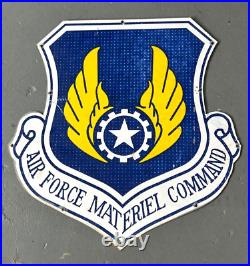
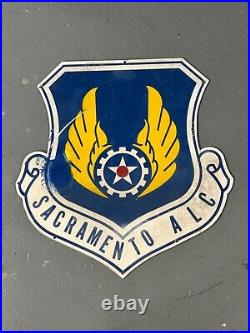
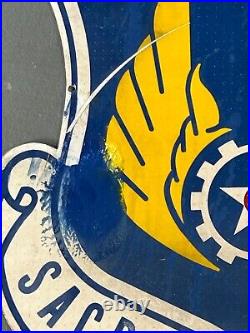
Vintage US Air Force Material Command Sacramento ALC Double Sided Metal Sign. It measures 18 inches wide by 18.5 inches long, has scratches, dings and scuffs. Also faded from weathering, but still displays great.
If you collect militaria as I do this U. Air Force Command Pilot Wings Plaque should be displayed in your collection. I’ve had it mounted on my wall for many years now and decided to make a change. The plaque measures approximately 17″ long and is about 7½” tall. Its weight is just over 2½ lbs. There are two pre-drilled holes that are original to the plaque’s design. These screw holes are provided so the plaque can be attached to the wall for display. The two screws I removed are taped to the back of the plaque for your use. This metal USAF Command Pilot Wing plaque is in excellent displayed condition as pictured. I DO MY VERY BEST TO DESCRIBE THE ITEM OR ITEMS IN MY SALE.